
Security and Risk
Common Web3 Scams: Phishing Links, Fake Support, Fake Airdrops, and Approval Traps
A beginner safety guide to common Web3 scams: phishing links, fake support, fake airdrops, malicious approvals, recovery scams, and safe habits.
Updated: June 29, 2026. This article is for education only. It is not investment, legal, tax, or financial advice and does not represent any exchange or wallet provider. Always check the official page in your region before registering, depositing, trading, or withdrawing.
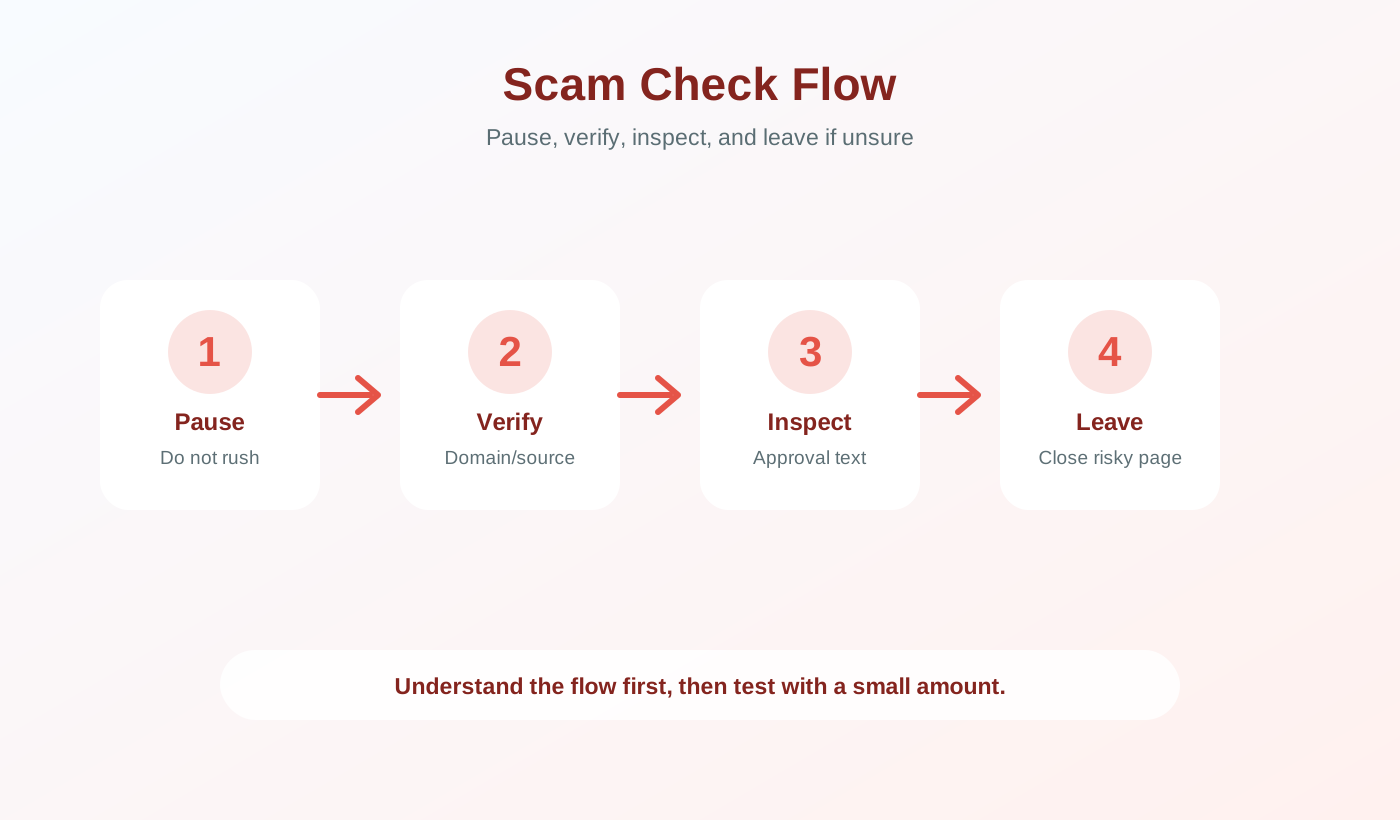
Most Web3 scams rely on urgency. If someone pushes you to act fast, keep it secret, share codes, enter a seed phrase, sign a transaction, or move funds to a “safe address,” pause.
Common scams
Phishing links imitate exchanges, wallets, or project pages. Fake support accounts ask for private information. Fake airdrops lure users into wallet approvals. Recovery scams target people who have already lost funds.
Red flags
- A private message claims to be support.
- A page asks for seed phrases or private keys.
- Someone asks for screen sharing or remote control.
- A signature request is unclear.
- A link uses a suspicious domain or shortened URL.
- A person promises guaranteed recovery or guaranteed returns.
Safer habits
Use official entry points, verify domains, read approval requests, test with small amounts, and keep records of transaction hashes. When unsure, close the page and start again from a trusted source.