
Security and Risk
Is OKX Safe? 12 Risk Checks Beginners Should Make Before Registration or Deposit
A beginner-friendly OKX safety guide covering official entry points, regional access, KYC, account security, proof of reserves, wallet custody, withdrawal networks, fees, and scam prevention.
Updated: June 29, 2026. This article is an independent beginner safety guide. It is not investment, legal, tax, or financial advice, and it does not represent OKX or any exchange. Product availability, verification rules, fees, and withdrawal conditions vary by region. Always check the current official page before taking action.
When beginners search “Is OKX safe?”, they usually want a practical answer: Can I register? What should I check before depositing? How do I avoid fake links, fake support, wallet mistakes, and high-risk products?
A better question is not “Is any exchange 100% safe?” No platform, wallet, or blockchain product can remove all risk. A more useful question is: What should I verify before using OKX, and what mistakes should I avoid as a beginner?
Quick answer
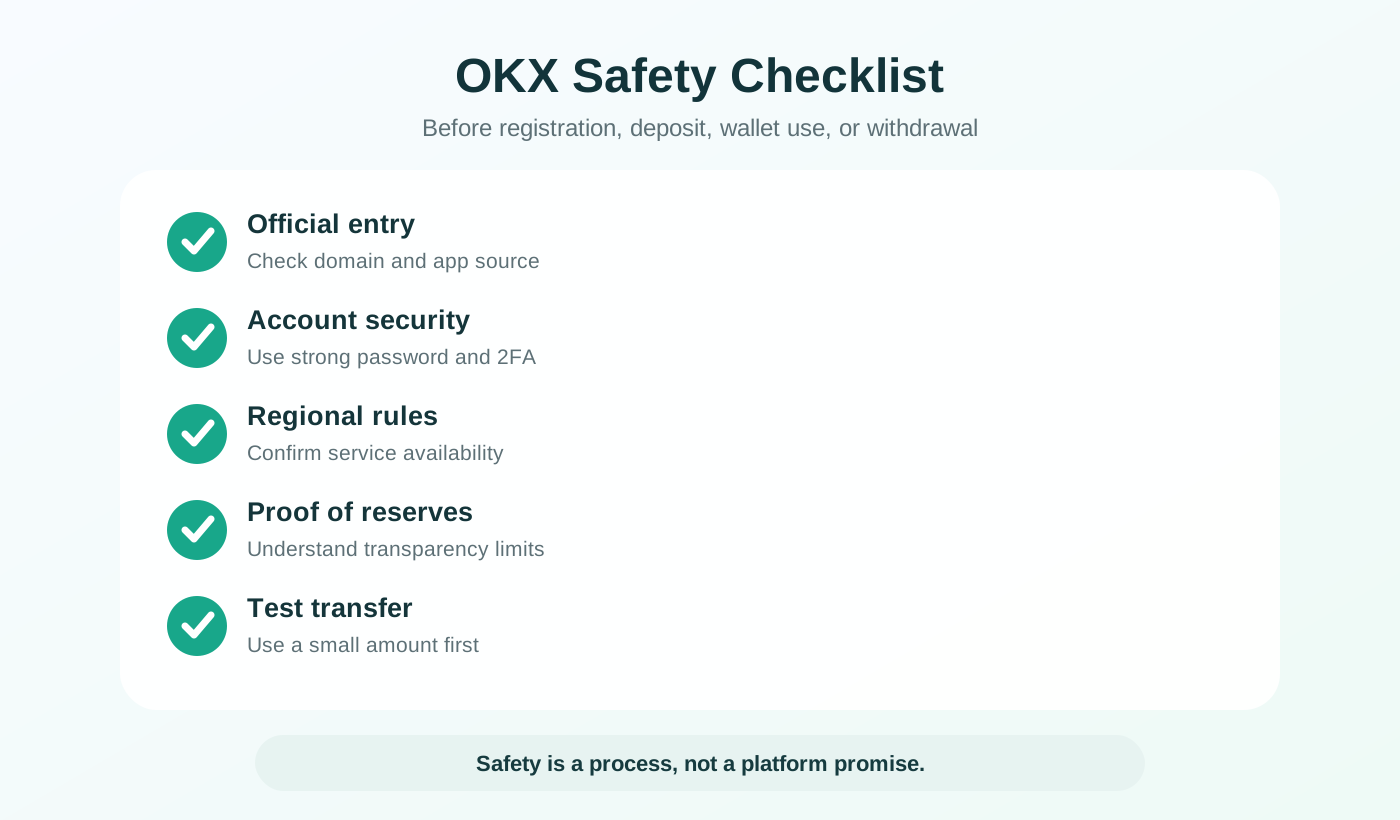
OKX provides exchange services, account security settings, proof-of-reserves information, and a Web3 wallet ecosystem. These tools can help users evaluate transparency and manage risk, but they do not make every action safe. Beginners still need to check regional availability, use the official entry point, enable account protection, understand wallet custody, and test withdrawals with small amounts.
1. Start from the official entry point
The first risk is not trading. It is landing on a fake website, fake app, or fake support page. Before registering, manually verify the official domain or app source. Avoid private-message links, shortened URLs, sponsored links you have not checked, and “support” accounts that contact you first.
If someone sends you a registration link and then asks for screenshots, verification codes, seed phrases, or remote-control access, stop immediately.
2. Confirm regional access and product availability
Exchange products are not available in the same way everywhere. Registration, identity verification, fiat access, trading products, wallet features, and withdrawal rules can differ by location. Do not assume a feature is available to you because another person can use it.
Before depositing funds, check whether your region is supported and whether the specific product you want to use is available.
3. Understand KYC before submitting documents
KYC means identity verification. It may require personal documents, face checks, and matching account information. Use only official channels, do not pay someone to “pass KYC,” and do not submit private documents through unofficial forms or chat messages.
If verification fails, follow the official process. Repeatedly sending documents to strangers creates privacy and account risk.
4. Secure the account before depositing
A beginner should set up account security before moving funds in:
- Use a unique password that is not reused from email or social accounts.
- Enable authenticator-based two-factor authentication when available.
- Set anti-phishing protections or official email recognition tools where available.
- Review login devices and account activity.
- Learn how withdrawal address controls or whitelists work before using them.
Security settings are not optional decoration. They are part of the onboarding process.
5. Proof of reserves is useful, but not a guarantee
OKX publishes proof-of-reserves information and explains reserve ratios, verification methods, and wallet address transparency. This is useful for learning how an exchange communicates asset backing and transparency.
But proof of reserves is not the same as a guarantee of investment safety. It does not eliminate market volatility, account takeover risk, regional restrictions, product risk, phishing, or user transfer mistakes.
6. Know the difference between OKX account and OKX Wallet
An OKX exchange account and OKX Wallet are not the same thing. An exchange account is platform-managed. A Web3 wallet involves self-custody and onchain actions such as signing, approvals, swaps, DApp connections, and network selection.
If you do not understand seed phrases, private keys, approvals, gas fees, and malicious signatures, do not rush into wallet interactions.
7. Check fees and withdrawal rules on the current page
Fees can depend on product type, user level, asset, network, and exchange rules. Withdrawal fees and network support can also change. Do not rely on old screenshots or fixed numbers from random guides.
Before any withdrawal, check token, network, destination address, minimum amount, final fee, confirmation requirements, and whether a memo/tag is needed.
8. Use a small test transfer first
The safest beginner habit is simple: test with a small amount before moving more. This is especially important for USDT transfers, because the same token name can exist on different networks such as ERC-20, TRC-20, BEP-20, and others.
A wrong-network transfer may not be automatically credited. Recovery is not guaranteed and depends on the receiving platform or wallet.
9. Avoid advanced products until you understand them
Spot trading, margin, futures, options, copy trading, structured products, and yield products have different risk levels. Beginners should not start with leverage or products they cannot explain in plain language.
If you cannot explain how a product can lose money, you are not ready to use it.
10. Watch for fake support and recovery scams
Fake support often appears after a user posts a problem online. The scammer may claim they can unlock an account, recover a transfer, or fix a wallet issue. They may ask for seed phrases, private keys, verification codes, or a “recovery fee.”
Real support should not need your seed phrase or private key. Anyone asking for them should be treated as high risk.
11. Beginner OKX safety checklist
Before registering or depositing, answer these questions:
| Question | Why it matters |
|---|---|
| Did I enter from an official source? | Avoid phishing and fake apps |
| Is my region supported? | Rules and product access vary |
| Do I understand KYC requirements? | Protect identity and privacy |
| Is 2FA enabled? | Reduce account takeover risk |
| Do I understand deposit and withdrawal networks? | Prevent wrong-network transfers |
| Have I checked current fees? | Avoid relying on outdated numbers |
| Am I using a small test transfer first? | Reduce irreversible mistake risk |
| Do I understand exchange account vs wallet? | Avoid custody confusion |
| Am I avoiding leverage and complex products? | Reduce beginner loss risk |
| Can I recognize fake support? | Prevent phishing and recovery scams |
12. Final recommendation
Do not treat any exchange as “safe by default.” Treat safety as a process: verify the entry point, secure the account, understand the product, check the network, test small, and keep records.
OKX can be part of a beginner’s learning path, but only if the user understands the difference between platform tools, wallet responsibility, and personal risk management.