
Web3 Basics
What Is Web3? A Beginner Guide to Wallets, Networks, Gas, and Safety
A beginner-friendly explanation of Web3, wallets, networks, gas fees, stablecoins, exchanges, private keys, and safety boundaries.
Updated: June 29, 2026. This article is for education only. It is not investment, legal, tax, or financial advice and does not represent any exchange or wallet provider. Always check the official page in your region before registering, depositing, trading, or withdrawing.
Web3 is easier to understand when you stop treating it as one app. In Web2, you usually create separate accounts on separate platforms. In Web3, a wallet address can interact with different blockchain applications, sign messages, send transactions, and hold assets across networks.
The six ideas beginners should know
| Idea | Plain meaning | Common mistake |
|---|---|---|
| Blockchain | A public transaction ledger | Assuming all chains work the same |
| Wallet | A tool for addresses and signatures | Thinking coins are stored inside the app |
| Address | Where funds can be received | Copying without checking the network |
| Gas | The cost of onchain actions | Assuming every fee is paid in USDT |
| Exchange | A platform account for buying and selling | Treating it like a self-custody wallet |
| Private key / seed phrase | Control over a wallet | Saving it in screenshots or chats |
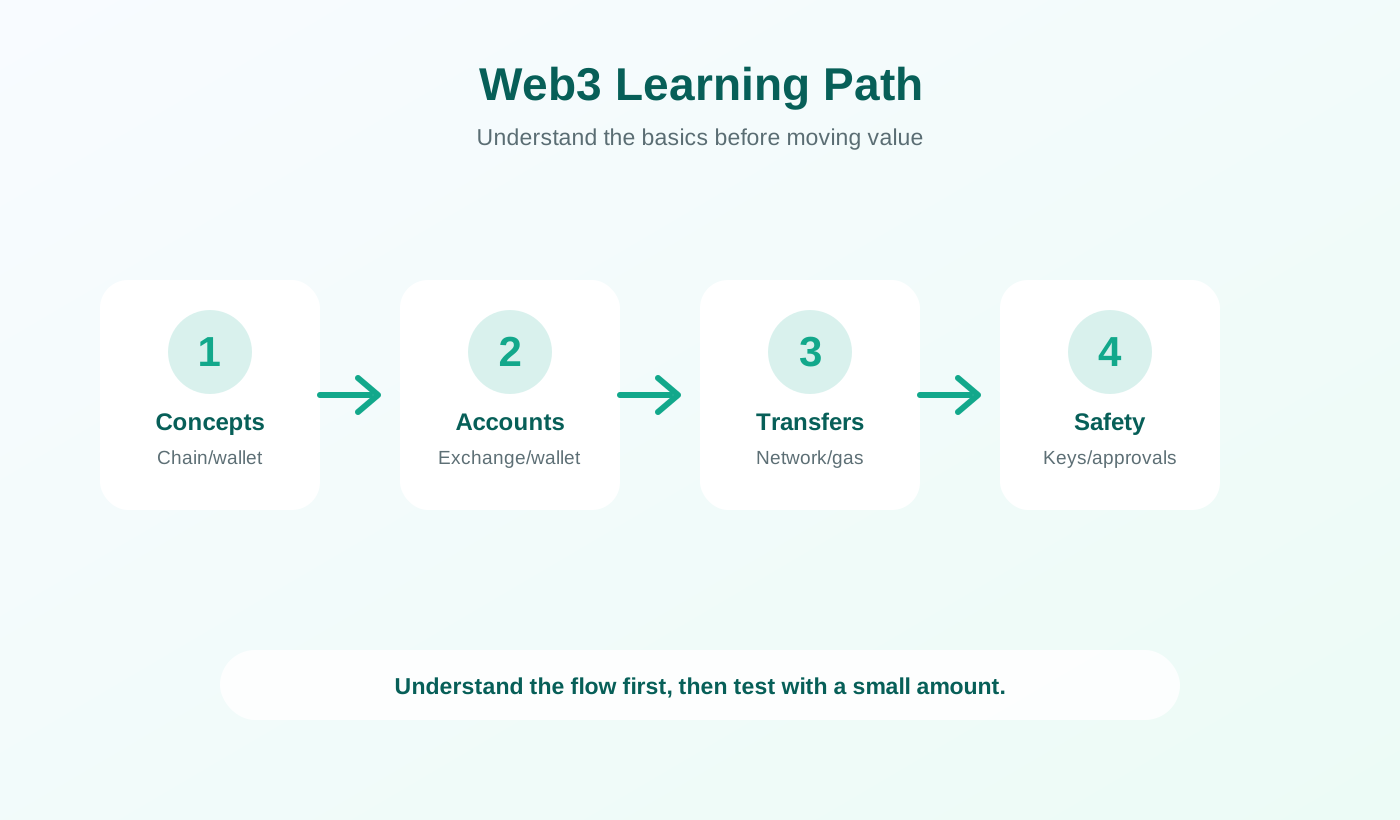
A practical learning order
Start with concepts, not speculation. Learn what a wallet does, how exchanges differ from wallets, why networks matter, what gas is, and how approvals work. Only then should you try a small transfer or connect to a decentralized app.
Safety boundaries
Never share seed phrases, private keys, verification codes, or remote-control access. If you do not understand a wallet signature, do not approve it. If a page pushes urgency, secrecy, or guaranteed returns, pause and verify from official sources.